




Australian Museum


Product List
Product List
Highlights
- Australia’s oldest museum with 22 million+ unique exhibits
- Fun, interactive experiences perfect for families and kids
- Prime Sydney CBD location opposite Hyde Park
Overview
Step into a world of wonder at the Australian Museum, located in the heart of Sydney. With free general entry, it is a must-visit destination for the curious at heart. Founded in 1827, it is Australia's first museum and has over 22 million scientific specimens and cultural objects in its collections.
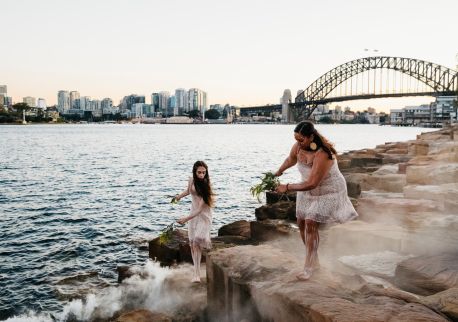
Experience the rich traditions of Australia's First Nations Salt Water Peoples in Garrigarrang. Learn about the knowledge systems and sustainable…
Step into a world of wonder at the Australian Museum, located in the heart of Sydney. With free general entry, it is a must-visit destination for the curious at heart. Founded in 1827, it is Australia's first museum and has over 22 million scientific specimens and cultural objects in its collections.
Experience the rich traditions of Australia's First Nations Salt Water Peoples in Garrigarrang. Learn about the knowledge systems and sustainable practices used for countless generations that helped Australia's First Nations peoples become one of the oldest continuous living cultures on the planet.
Journey back in time and walk among real dinosaur skeletons and life-sized models of prehistoric creatures, including the Australian Muttaburrasaurus and the world's first-ever anatomically correct replica of a T.rex.
Young adventurers will love the Museum's award-winning, immersive learning and play space, where they can explore the world through the eyes of a burra (eel). Filled with interactive play zones and hands-on discovery, it's fun for the whole family.
Refuel and recharge with a range of dining options at the Australian Museum, from lunch with a view over Hyde Park at Bistro Gadi to casual, family-friendly fare at Billabong Waterhole café.
Get in touch
Product List
More Like This
Product List
Location
FAQs
Accessibility
Access and Inclusion Statement
Allows a person's carer free entry into participating venues and events
Actively welcomes people with access needs.
Advise tour guides of the access needs of guests at the time of booking (includes pick up and drop off requirements)
Caters for people who are blind or have vision loss
Caters for people who are deaf or have hearing loss
Caters for people who use a wheelchair.
Caters for people with allergies and intolerances.
Caters for people with high support needs who travel with a support person
Caters for people with sufficient mobility to climb a few steps but who would benefit from fixtures to aid balance. (This includes people using walking frames and mobility aids)
Employ people with disability
Have Braille and tactile signage on all information and paths of travel
Have a bathroom which is fully accessible and equipped with ceiling hoist and adult change table
Have a Changing Places or Lift & Change toilet with a hoist and adult change table
Have a hearing loop
Have a step free main entrance to the building and/or reception area (includes ramps or slopes with a maximum gradient of 1:14, otherwise are too steep for wheelchairs)
Have a wheelchair accessible toilet / shower and change room
Have accessibility information and photos, including of a bathroom, room and/or floor plan on your website (can be emailed on request)
Have accessible seating areas in theatrette
Have an accessible public toilet which is unlocked
Have an appropriate area for toileting an assistance dog
Have grab rails in the bathroom
Have handrails on all your stairways
Have lifts with enough space for people using a mobility aid to enter and turn around to use the lift buttons. Buttons are at accessible height.
Have raised tactile buttons in your lifts
Have step free access to restaurant, lounge and bar
Have step free access to the conference or function room
Have step free outdoor pathways (includes picnic areas, barbecues and shelters)
Have telephones which are compatible with hearing aids
Have volume controlled phones
Have wheelchair access to amusements and activities including boats and bush trails (includes tour rides, skyways, trolley cars, flying fox, amusement rides and boating)
Offer a range of contact methods for receiving complaints
Offer multiple options for booking - web, email, phone
Provide assistance with booking arrangements (includes providing clear itineraries with written instructions on what to do at various destinations)
Provide information in audio format (includes an audio described map of your venue, audio descs of performances and/ or displays)
Provide information in large print
Provide seating in common areas including reception area
Train your staff in customer service for people with vision loss (training would incorporate way finding and communicating with people with vision loss)
Train your staff in communicating with people who are deaf or have hearing loss
Train your staff in communicating with people with learning or behavioural challenges
Train your staff in disability awareness
Train your staff to respond to allergic reactions
Use easy read fonts in your signage and communication materials (Helvetica and Arial)
Use Plain English / easy read signage and information (includes menus and emergency information)
Website meets WCAG 2.0 accessibility standards
Welcomes and assists people who have challenges with learning, communication, understanding and behaviour. (includes people with autism, intellectual disability, Down syndrome, acquired brain injury (ABI), dyslexia and dementia)